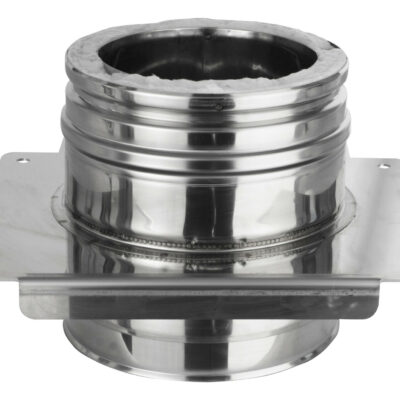
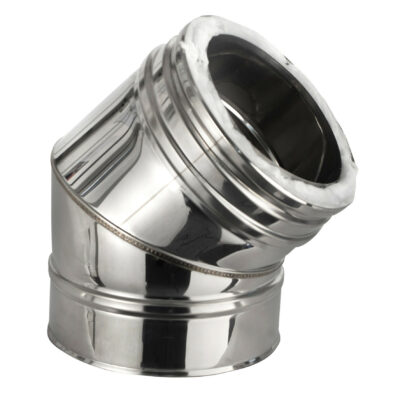
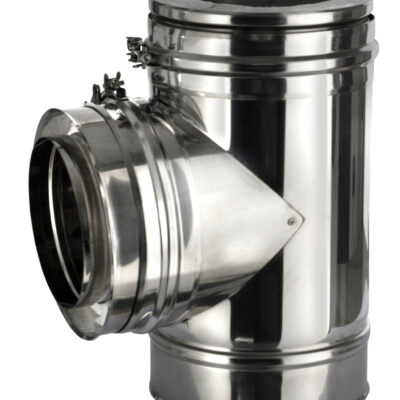
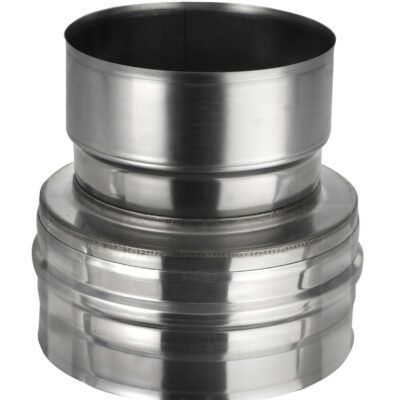
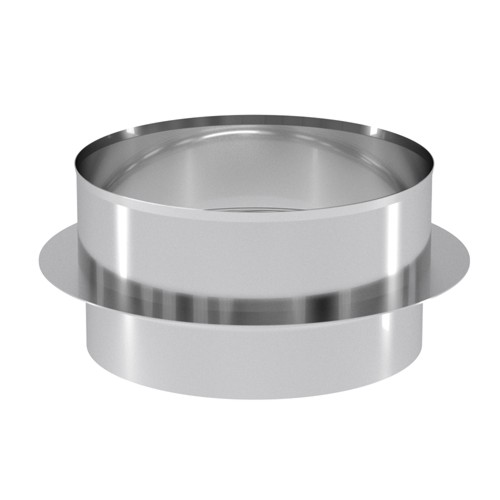
Starting Connector – ICS

Starting Connector – ICS

This is an uninsulated item, which connects directly into the appliance spigot. The steel ring blocks off the insulation of the next ICS component.

  • Allows connection to the appliance.
  • For use on Gas, Oil, Wood & Multi-fuel applications
  • Continues operating temperatures of 450°C and short firing temperature of 550°C
  • 25mm High efficiency Superwool insulation.
  • Simple push fit connection
  • Corrosion resistant 316L Stainless Steel.
SKU: Starting Connector - ICS Categories: , Tags: , , ,

Available Options:

Description

ICS is a twin wall insulated chimney system for use on open and closed stoves, open fires, residential and small commercial multi fuel appliances, with continuous operating temperatures up to 450°C and short firing up to 550°C.

ICS is converted into ICS Plus by adding a lip seal to each component with a male form on the liner. This creates a twin wall insulated chimney system designed for the new generation of condensing gas and oil appliances, with continuous operating temperatures up to 200°C, short firing up to 250°C, and positive pressure up to 200pa at the appliance outlet.

For larger commercial and industrial applications of ICS in diameters 300mm to 700mm please refer to our separate sales brochure. For higher pressure applications up to 5000Pa e.g. generators, combustion and process equipment, please see the commercial brochure.

  • Simple push-fit jointing system, secured by locking band.
  • Advanced corrosion resistant design and construction uses laser welded 316L stainless steel inner liners and 304 stainless steel case. The only stainless steel system to have passed the internationally recognised GASTEC corrosion test.
  • The jointing system increases rigidity and ensures easy draindown of any condensate in the flue.
  • Capillary break prevents moisture being drawn through the joint.
  • Because of the sleeve joint, the insulation in the pipe is able to be continuous along the length of the system ensuring no hot spots.
  • The 25mm high efficiency Superwool blanket maintains flue gas temperature, maximising efficiency, improving flue draught on start up and minimising condensation.
  • Low external case temperature.
  • The assembly method allows the inner liner to expand and contract with temperature at the female end. The flue can withstand the temperatures of a soot fire without loosing the integrity of the joints.
  • Generous lead-in edges on liner and case for ease of jointing.

Schiedel Isokern Garden Fireplace Installation Guide

Thinking about transforming your outdoor living space with a premium volcanic pumice fireplace or outdoor kitchen? To help you prepare for a seamless installation, we’ve compiled the answers to the most common questions regarding safety clearances, UK planning laws, and environmental regulations.

Structural & Safety Clearances

Can I build my garden fireplace directly onto my timber decking?

No. Due to the substantial structural weight of these premium volcanic pumice packages—which range from 460kg up to 1,490kg fully built—they must never be placed on timber decking.

Instead, they require a flat, solid foundation. We strictly recommend a minimum 100mm thick reinforced concrete base to guarantee the completed structure won’t sink or slant over time.

How close can the fireplace be placed to wooden fencing or a pergola?

Because volcanic pumice is a highly effective, natural insulator, the exterior of the fireplace remains safe to touch. However, a precise buffer zone must be maintained between the structure and any combustible materials:

  • The Hale Outdoor Kitchen: Requires a minimum clearance of 100mm.
  • The Kingham & Standalone Fireplaces (500, 950, 1200 Models): Require a minimum clearance of 75mm.

I want to position the chimney near or through a pergola roof. How high should it go?

The chimney flue must completely clear the height of your pergola canopy to ensure exhaust smoke and sparks disperse safely away from your seating area.

If your design requires extra height to clear an overhanging beam line safely, additional chimney blocks can be purchased separately and added to the vertical stack during assembly. We also highly recommend adding a Rain Cap / Wave canopy to maintain a reliable upward draft and block weather down-drafts.

UK Planning Permission & Boundary Rules

Do I need formal Planning Permission from my local council to install a garden fire?

For the vast majority of residential homes, permanent brick or stone barbecues and outdoor fireplaces fall under Permitted Development rights (similar to garden outbuildings or enclosures). This means they do not require a formal planning application, provided your project meets specific layout criteria.

How close to my neighbor’s boundary line or fence can I build the fireplace?

This depends entirely on the total height of your completed structure (including the chimney capping):

  • Structures up to 2.5m tall: Can be positioned as close to your boundary fence or wall as you like (though we recommend a small gap to make rendering the exterior easier).
  • Structures taller than 2.5m: The entire unit must be shifted forward into your property line so that it sits more than 2 metres away from any boundary line or fence.

What are the absolute height limits if I move it more than 2 metres away from the boundary?

Once your fireplace is positioned safely past the 2-metre boundary zone, your Permitted Development allowances increase:

  • Your structure can go up to a maximum height of 3 metres for standard mono-pitch or custom flat profiles.
  • It can go up to a maximum height of 4 metres only if the structure features a dual-pitched (apex/A-frame) roof line.

Note: If your space is restricted and you cannot move a chimney taller than 2.5m at least 2 metres away from a boundary, you must submit a formal Householder Planning Application to your local council before starting construction.

Are there any extra restrictions if my fireplace is completely freestanding?

Yes. If you plan to install your garden fireplace as a standalone, freestanding unit (rather than building it flush against a solid masonry wall or as part of a fully supported outdoor kitchen layout), you must carefully consider the maximum height for wind safety:

  • Standard Kit Height: Our standard packaged kits are completely load-bearing and fully safety-tested to be freestanding at their delivered heights.
  • Adding Extra Chimney Blocks: While you can easily purchase extra chimney blocks to increase the height of your flue, we strongly advise against extending a freestanding chimney beyond 3 metres in total height without a professional structural review.
  • When to consult an expert: If your property is located in an exceptionally exposed or high-wind area (such as a coastal zone or an elevated hillside), or if your custom design calls for a highly extended freestanding chimney flue, you should consult a qualified structural engineer before building. They will assess your local wind load factors and advise if your specific site requires a deeper concrete foundation pad or specialized internal structural reinforcement.

Are there any other garden layout rules I need to worry about?

  1. No Front Yards: You cannot construct a permanent garden fireplace or structure on land forward of the front facade (principal elevation) of your home. It must be situated to the side or rear.
  2. The 50% Rule: The space occupied by the fireplace, outdoor kitchen modules, and any existing sheds/outbuildings must not collectively take up more than 50% of the total land area surrounding your original house.
  3. Designated Land & Listed Buildings: If your home is legally a Listed Building or sits within a Conservation Area, National Park, or Area of Outstanding Natural Beauty (AONB), permitted development rights are typically restricted or removed. You will need to check with your council before starting any stonework.

Environmental & Smoke Regulations

Can I use my garden fireplace if I live in a designated UK Smoke Control Area?

Yes. While the UK Clean Air Act regulates chimney smoke inside urban areas, unroofed outdoor garden fireplaces and barbecues are broadly exempt from domestic indoor chimney restrictions. However, you can still face local enforcement if your fireplace creates what the law defines as a “Statutory Nuisance.”

What is a “Statutory Nuisance” and how do I avoid it?

Under Section 79 of the Environmental Protection Act, if smoke, ash, or persistent fumes from your garden fire regularly blow directly into a neighbor’s property—preventing them from opening their windows, sitting outside, or hanging out laundry—the local council can issue an Abatement Notice.

To avoid this, always position your fireplace where prevailing winds won’t push smoke directly toward neighboring windows, and extend your chimney height if necessary to discharge smoke cleanly upwards.

What fuels am I legally allowed to burn?

To ensure a clean, efficient burn, you should strictly use clean, dry, and seasoned wood logs—ideally labeled with the Woodsure “Ready to Burn” logo, which certifies a moisture content below 25%.

Never Burn: Treated or painted waste wood, old pallets, plastic, or household rubbish. Burning these materials releases volatile, toxic chemicals into the air, creates heavy dark smoke, and leads to an immediate buildup of corrosive tar within your chimney structure.

For stove and chimney installers – whenever you register an installation with our easy to use, online guarantee registration portal, you will now accrue points based on the number of installations. So click here to start and register your installations, taking full advantage of our Lifetime Guarantee on Flex and ICID, as well as guarantees on all our other ranges, and to start earning points 🙂

ICS brochure

ICS installation instructions

Click here to view Certificates and Declarations of Performance

Schiedel is the first European chimney manufacturer to have performed the tests according to this latest fire resistance standard for chimneys. European standard BS EN 1366-13:2019 “Fire resistance tests for service installations, Part 13: Chimneys” and has reached EI 120 classification for our Double Wall Insulated System Chimney ICS in a closed scenario (type A) for both vertical and horizontal set-ups.

ICS is CE Certified to EN1856-1 TÜV 0036 CPR 9195 001 with designations
ICS is CE Certified to EN1856-2 TÜV 0036 CPR 9195 041 with designations

System Chimney EN1856-1

T450 N1 W V2 L50050 G60
T450 N1 D V3 L50050 G60
60mm Distance to combustibles in a combustible shaft*

T450 N1 W V2 L50050 G50
T450 N1 D V3 L50050 G50
50mm Distance to combustibles in a non combustible shaft or in free air*

T200 P1 W V2 L50050 O00
Zero distance to combustibles*

Connecting Flue Pipe EN1856-2

T450 N1 D V2 L50050 G100 M

  • Manufactured under a Quality Management Scheme approved to BS EN ISO 9001
  • 4 Hour Fire Rating to BS476 Part 20
  • Certified for corrosion resistance on gas, oil and solid fuel by Gastec, MPA and TÜV
  • HETAS listed for use on solid fuel applications.

FREE Access to advanced CAD modelling files.

Please visit our external BIM (Business Information Modelling) for access to advanced modelling files in a number of formats. Please note that you will have to register and login for access to the files.

Click here to access our BIM files. 

A useful app with guides on installation as well as step-by-step video guides.

This app was designed for installers to have all the information they require in a few quick clicks. This makes it easier for installers rather than having to carry paperwork during the installation process with video breakdowns of each stage of the installation process.

Download the iPhone and iPad version in the App Store and Android version in the Google Play Store.

app store  e google play  e